Many of us in class adore The Daily Show and the Colbert Report. I'm sure we've all read an Onion fake news article recently and perhaps have even chuckled at the occasional New Yorker comic strip. What all of these have in common is a shared platform of comedy. We know to expect comedy from each of these sources. That is why I find it particularly delightful and surprising when the Opinion section of the New York Times gets a little sassy.
This week, the NYTimes writer David Javerbaum wrote a piece called "A Quantum Theory of Mitt Romney", which expertly and cheekily deconstructs Romney's strange web of policy and declares him the first "quantum politician".
Alluding to the "Etch A Sketch" gaffe made by Romney's campaign adviser, Javerbaum comforts Mr. Fehrnstorm by assuring him that, the "impulse to analogize is understandable. Metaphors like these, inexact as they are, are the only way the layman can begin to grasp the strange phantom world that underpins the very fabric of not only the Romney campaign but also of Mitt Romney in general."
Javerbaum explains : "Under these Newtonian principles, a candidate’s position on an issue tends to stay at rest until an outside force — the Tea Party, say, or a six-figure credit line at Tiffany — compels him to alter his stance, at a speed commensurate with the size of the force (usually large) and in inverse proportion to the depth of his beliefs (invariably negligible). This alteration, framed as a positive by the candidate, then provokes an equal but opposite reaction among his rivals. But the Romney candidacy represents literally a quantum leap forward. It is governed by rules that are bizarre and appear to go against everyday experience and common sense."
He then describes how Romney fits into the quantum theory rules of probability, complementarity, entanglement, noncausality, duality, and my favorite, uncertainty ("...frustrating as it may be, the rules of quantum campaigning dictate that no human being can ever simultaneously know both what Mitt Romney’s current position is and where that position will be at some future date. This is known as the “principle uncertainty principle...").
Is this cynical? A little. But every good comic knows that things are only ever funny when truth is present.
Do you know of other surprising examples of satire in serious periodicals like the New York Times? Please share!

Showing posts with label American Media. Show all posts
Showing posts with label American Media. Show all posts
Monday, April 2, 2012

Monday, March 26, 2012
Obama's "Secret Agenda" and Your Future
Although there has been much speculation on what people are
calling “Obama’s own Etch A Sketch moment”, I find it hard to rap my head
around how blown over proportion the President’s comment to Russian President
Dmitry Medvedev has become. It troubles me how such a seemingly subtle comment
as
“This is my last election. After my election,
I have more flexibility.”
Can inspire such scenes as this:

Which doesn’t surprise me as this quote will undoubtedly be
relentlessly used by republicans to criticize the President’s supposed “secret
agenda”. In regards to the President’s “secret agenda” Republicans pose this to
the public:
“Ready for mandatory military service, disarmament and
censored speech? If not, then either prepare yourself for Obama’s New World
Order and socialism or start investigating what our America will become.”
And let’s not forget comparing the President to “... Hitler,
Stalin, and Lenin.”
Though I may be lacking the vivid imagination that automatically
kicked in for some Republicans after hearing President Obama’s comment, I do
have the will to analyze this “hot mic” scandal further in detail so as to
conclude whether or not media framing is responsible for this nonsense criticism.
What I am referring to as framing is specifically episodic
framing. Shanto Iyengar defines episodic framing as “event-oriented reports [that]
depicts public issues in terms of concrete instances.” Iyengar notes that, “Television
reports that rely on visuals of an event will be more entertaining to an
audience, yet provide little useful narrative interpretation to understand the
broader issue.”
The sound bite of President Obama’s comment, along with the
photo depicting the conversation, seem to be perfect examples of episodic framing
because:

1)
It is entertaining to catch the President in a suggestive
moment which to many implies a radical second term if he were to be re-elected.
2)
Although this sound bite is entertaining to many
with strong imaginations, it does little to inform the public of what the
broader subject of the President’s bilateral meeting with Russian President
Medvedev, which was to exemplify the cooperation between the US and Russia so
as to look forward to resolving issues with missile defense.
I began with the intention to defend the President from
further criticism by analyzing this sound bite for what it truly is: an
incident of episodic framing. For those who lie awake at night shivering in
their sheets, with the thoughts of the President’s “secret agenda” I ask you
one question: Why would the President after having four years to implement this supposed “secret agenda”
wait until his second term to unleash this agenda when 4 perfectly good years
have just gone by? And furthermore why would you undermine a system of checks
and balances where a president cannot act with authoritarian rule?
<http://politicalticker.blogs.cnn.com/2012/03/26/open-mic-catches-obama-asking-russian-president-for-space-on-missile-defense/?hpt=hp_c1>
<http://www.pakalertpress.com/2010/12/27/prepare-new-nuclear-war-preparedness-guide-fedgov/>
<http://gothamist.com/2012/03/26/obama_caught_telling_truth_on_hot_m.php>
<http://www.whitehouse.gov/the-press-office/2012/03/26/remarks-president-obama-and-president-medvedev-russia-after-bilateral-me>
<http://merciad.mercyhurst.edu/node/61>
<http://www.washingtontimes.com/news/2012/mar/26/obama-begs-russians-space-missile-defense-talks/>
<http://bostonglobe.com/2012/03/26/president-obama-has-own-etch-sketch-moment-with-open-mic-comment-russian/WQWVRUifiTfjgy5ciFmxcI/story.html>
<http://www.americanthinker.com/blog/2012/03/obamas_flexible_second_term.html>
Tuesday, March 20, 2012
Blurring the Lines of the Public vs. the Market Audience
 The image above is provided by the liberal blog ThinkProgress and the short, cranky article that dissects it can be found here. If you're not familiar with the Treyvon Martin story, the confirmed facts of the case be found here. In a nutshell, a 17 year-old, unarmed African American boy was shot by 28 year-old white man named George Zimmerman. So far, Zimmerman's motive is unclear, but a 911 recorded conversation just before the shooting revealed that Zimmerman followed him unnecessarily and reported that Martin looked "like he's up to no good, on drugs or something." Martin had no criminal record to date.
 Above, ThinkProgress charts the amount of news coverage each of the three major news networks allotted to this story. To only report on the development of this story once is uhm, outrageous. Here, the liberal blog Wonkette eviscerates Fox News for their negligence, so if you're into that sort of thing, you'll enjoy their take down of the outlet they describe as a "steady stream of artlessly jingoistic vomit, spewing forth from helmet-headed hairspray sacks who move their lips while reading important reports on hurricanes and other outrages against Heartland (= white, irrespective of actual location) America." But it's easy to pick on Fox News.
Instead, I'd like to ask whether Fox News' decision to neglect this story reflects their view of their audience as a public or a market. Usually, stories of senseless violence are the sort of thing the public audience thinks it deserves to know about. Coupled with the issue of race, the Martin story is definitely the stuff of evening prime time news. Why did Fox ignore it? Were they worried about offending members of their white audience who sympathize with Zimmerman's fear of blacks? It strikes me that Fox could have still reported the story and weighed in on the issue by coming to the defense of Zimmerman. What's going on here?
Monday, March 19, 2012
We Need Blood
Chapter 27 of Doris A. Graber’s book “Media Power In Politics” discusses Sean Aday’s article “The Real War Will Never Get On Television: An Analysis Of Casualty Imagery”. Aday’s article concerns a simple dilemma, the media will never portray war as it truly is: an “awful” endeavor. The concern is with the medias’ refusal to depict the gruesome carnage that is the result of war. What I want to focus on during the remainder of this article is addressing a claim found in Aday’s article by Walt Whiteman, “The real war will never get in the books.” A question that arouse to me after reviewing this article is: Should the media reveal the graphic nature of war, for the purposes of reporting the full implications of war as observed by the reporters? What I have determined to be my response to this question is: Yes, the media should in fact expose the graphic nature of war so as to adequately inform the public of what the “real war” is like. I believe that that the exposure to this graphic content a necessary to fulfilling the media’s role in a democracy of informing the public of what the “real war” is; so that we may understand the full implications of war in the future consideration in military involvement. If we exposed to war as it really is we may better understand what war is and may aid us in refraining from military action unless determined to be absolutely necessary. It is therefore that I have determined that this graphic content as absolutely essential information in the evaluation of whether or not military action is appropriate. Seeing that this information is essential to the objectivity of war coverage the media does have an obligation to expose us to the graphic nature of war, under its role of informing the public as a media serving a democracy. What implication’s this graphic content would have can range from: Increasing support for a war by displaying the state of the afflicted, to; lessening the support for war as a protection for all of humanity.
On the Monkey Cage, John Sides blogged about public knowledge of recent political events, ones that we can assume were reported on by the mass media. In this blog titled, Why Campaigns Have So Few "Game-Changers," he commented that the survey showed that Americans cared very little about this campaign and the political events that have occurred.
While these are the findings of the survey, Sides concludes that although the inability to answer specific "events-related" questions accurately is shown, Americans are certainly not unintelligent or bad citizens. They just don't follow politics very closely, which is entirely normal.
Sides's most important comment however was what we can deduct from this survey- it does more "to question the assumptions of commentators, who are often anxious to inflate every argument during the campaign to a 'game changer'—even if many Americans aren’t really watching the game." This conclusion is interesting because it seems to contradict the nature of the "marketplace" with regards to the mass media providing what Americans desire to "consume." If Americans are not really watching the political game, then why would the media place emphasis on the campaign and what candidates are saying? Possibly, the media is fulfilling their role by still providing political coverage despite what the public truly desires to watch or read.
Typically, an average individual remembers the frivolous remarks or reports of the news such as the ones utilized in the survey-"Santorum’s statement about birth control, Obama’s call to Sandra Fluke, and Santorum’s comment about Obama’s snobbery." If Americans cannot even recall these highly reported events, what exactly are they doing? And if no one is truly watching, and the media still reports on it, are they doing their job?
Most importantly however, Sides's final conclusion raises the question of the media's role in influencing public opinion. If viewers aren't actually comprehending or using the news provided by the mass media, then they will never have a large effect on influencing public opinion.
While these are the findings of the survey, Sides concludes that although the inability to answer specific "events-related" questions accurately is shown, Americans are certainly not unintelligent or bad citizens. They just don't follow politics very closely, which is entirely normal.
Sides's most important comment however was what we can deduct from this survey- it does more "to question the assumptions of commentators, who are often anxious to inflate every argument during the campaign to a 'game changer'—even if many Americans aren’t really watching the game." This conclusion is interesting because it seems to contradict the nature of the "marketplace" with regards to the mass media providing what Americans desire to "consume." If Americans are not really watching the political game, then why would the media place emphasis on the campaign and what candidates are saying? Possibly, the media is fulfilling their role by still providing political coverage despite what the public truly desires to watch or read.
Typically, an average individual remembers the frivolous remarks or reports of the news such as the ones utilized in the survey-"Santorum’s statement about birth control, Obama’s call to Sandra Fluke, and Santorum’s comment about Obama’s snobbery." If Americans cannot even recall these highly reported events, what exactly are they doing? And if no one is truly watching, and the media still reports on it, are they doing their job?
Most importantly however, Sides's final conclusion raises the question of the media's role in influencing public opinion. If viewers aren't actually comprehending or using the news provided by the mass media, then they will never have a large effect on influencing public opinion.
Monday, February 20, 2012
Tweets v. Likes
Tweets vs. likes: Ana Analysis of Monkey Cage Data
Joshua Tucker on February 26, 2012
Joshua Tucker, writer for the Monkey Cage once posted a question about why some blog posts are more likely to be “tweeted” and why others are subject to being “liked” on Facebook. Later, Georgetown student compiled data from the Monkey Cage and made an analysis of why certain blog posts are tweeted or liked.
The student’s analysis theorized that blog posts are liked based upon their graphical content. Blogs that have graphics or graphs are more likely to be “liked” on Facebook because of this social network’s graphical and picture orientated nature. On the other hand, blogs with more “wonkiness” received more tweets as Twitter is a text based network.
This basic study reveals some insight about the orientation of both social networks. Facebook is highly dependent on graphics and pictures for their internet traffic. Twitter is based on amusing, witty, and short “tweets.”
Another aspect of the tweet and like war is the public versus private spheres. Twitter is seen more as a public forum while Facebook has some “perceived” privacy towards your own friends and family. Due to this difference, Tucker commented that he is much more likely to post highly partisan ideas on the semi-private Facebook wall than on Twitter’s public forum.
He believes that this certainly has some impact on political behavior over social networks. Tucker theorizes that the difference between the public v. private domains of Facebook and Twitter will help differentiate the effects of social media on the audience.
Social media seems to counter act the hypodermic reception theory. Because users can be more selective in their media source options, the audience is more active and is not a passive recipient. The internet also balances the “agenda setting” behavior of televised news. The “agenda” on social media sites is entirely set by the users, not by the company trying to make profits off of popularizing a particular view. Therefore, social media and media on the internet may allow its audience to become more active and aware members of society.
Monday, February 13, 2012
Academic Hope for TV News Station
MSNBC will become the first major news program to feature a talk show by a real tenured professor. The news station has a new program with Melissa Harry-Perry, a professor of political science.
MSNBC's newest academic addition scratches at the surface of the media's role as the protectors and promoters of the public interest and education. Perhaps this new model will become a trend for other televised new programs to follow? In hopes that it certainly does cause a new trend, the American public may prove to be more than just a mindless consumer market place. Academic scholars in well established news programs will provide an opportunity for a change in mass media towards its original goals of professionalism and objectivity.
Maybe, there is hope that televised news programs will provide "intellectual stimulation" for the general American Masses.
Tuesday, February 7, 2012
"Holy" Crap
Nota bene: Updates will be posted as the media jumps on
this. I am blogging this as it is unfolding.
On the class
blog, I will try to keep my personal religious beliefs out of this. It is hard
to find an appropriately controversial subject to analyze without it having any
sort of personal impact.
So what we have here
is a holy way. Literally. The Vanderbilt administration has placed rules on the
student population that a faith-based organization cannot pick their leaders
based on faith. While different denominations of Christians, Muslims, Jews,
Buddhists, and other don’t normally agree, they’ve seemed to come to a strong
unity on this issue.
But what will the
media say? As this unfolds, we will discuss the handling especially by
mainstream media sources that cater to the left and to the right. God help us
when Glen Beck gets ahold of this, and when Nancy Grace states her case.
Monday, February 6, 2012
Watergate Lesson Forgotten?
http://www.cnn.com/2012/02/04/politics/watergate-reform/index.html
The problem of potentially currupt finacial backing behind political candidates has been a big issue since the Watergate Scandal. Many poeple think a huge lesson of Watergate was that big money and secrecy currupts. Some experts are warning the public that the reforms made after Watergate to regulate campaign fundraising have been almost completely thrown away. There are no longer big regulations of campaign fundraising, but does that really matter? The flow of money to candidates is going to happen regardless of the law or regulations put in place to try and stop it. Candidates will get the money they need through any way possible, and if we think that simple reforms will stop them, we are nieve. Corporations and other powerful sources of money will always supply money to political candidates because they recieve favors in return for the money, whether its legal or not. The main issue is the secrecy of the sources behind all of the money the candidates get, because there could be some curruption involved.
It is impossible to stop the influence of money on political campaigning, but it is possible to somewhat regulate it. A political scientist and professor at the College of the Holy Cross in Massachusetts says, "The remedy is publicity". The most powerful way to help regualte the secret funding of political campaigns is the media. If the media exposed more information about which corporations are feeding money to which canidates, we could control the flow of money a little more and somewhat eliminate curruption. Transparency would give voters the information needed to hold the candidates accountable. However, in reality, it is unlikely that much will change about the fincacial backing of political candidates. This years elecetion will have an enormous amount of secret financial backing to candidates.
The problem of potentially currupt finacial backing behind political candidates has been a big issue since the Watergate Scandal. Many poeple think a huge lesson of Watergate was that big money and secrecy currupts. Some experts are warning the public that the reforms made after Watergate to regulate campaign fundraising have been almost completely thrown away. There are no longer big regulations of campaign fundraising, but does that really matter? The flow of money to candidates is going to happen regardless of the law or regulations put in place to try and stop it. Candidates will get the money they need through any way possible, and if we think that simple reforms will stop them, we are nieve. Corporations and other powerful sources of money will always supply money to political candidates because they recieve favors in return for the money, whether its legal or not. The main issue is the secrecy of the sources behind all of the money the candidates get, because there could be some curruption involved.
It is impossible to stop the influence of money on political campaigning, but it is possible to somewhat regulate it. A political scientist and professor at the College of the Holy Cross in Massachusetts says, "The remedy is publicity". The most powerful way to help regualte the secret funding of political campaigns is the media. If the media exposed more information about which corporations are feeding money to which canidates, we could control the flow of money a little more and somewhat eliminate curruption. Transparency would give voters the information needed to hold the candidates accountable. However, in reality, it is unlikely that much will change about the fincacial backing of political candidates. This years elecetion will have an enormous amount of secret financial backing to candidates.
Sunday, February 5, 2012
Politicians and Their Cringe-Worthy Tweets
I'm going to say something that will make me sound like a bitter luddite -- but what are blogs for if not for self-indulgent, peevish pontifications?
I'm kinda nostalgic for the pre-Twitter era.
There's no doubt that Twitter has given those without a voice a public arena in which they can express informed opinions, coordinate opposition movements , and break news happening in real time (examples of each linked). However, I think you and I both know that Twitter is also responsible for introducing you to the most inane thoughts of your friends, neighbors, and even celebrities.
Besides being newly privy to what my 61 year old Uncle Bob thinks of the new Nicki Minaj video, Twitter is also guilty of something much worse. It's responsible for confirming a frightening suspicion all of us have had about our elected officials: they can be idiotic sometimes, just like us.
For example, just yesterday through The Hill's "Twitter Room", I was able to read Senator Charles Grassley of Iowa's valuable opinion on the recent UN-Syria Resolution debacle. Though I join him in condemning Russia and China for their veto of the resolution that asks President al-Assad to step down from the Syrian government, I do not join him in taking to my Twitter account to rattle off a hasty, misspelled, and politically incorrect tweet. The tweet read:
"I app laude Amb Susan Rice strong statement abt Soviet Russia and Red China veto of Syria resoluition at U.N."
Soviet Russia? Red China? Don't even get me started on his mixed policy of letter allotment and lack of possessive modifiers.
Perhaps I'm mercilessly nitpicking at an older man who should be app lauded for using such a progressive tool of civic engagement. And you maybe be right. But there's no excuse for behavior like that of Congressman Anthony Weiner who in 2011 accidentally showed all of his twitter followers his package, or for politicians like Congressman Dana Rohrabacher who settle petty disputes via twitter feeds. What's more frightening is that in January, Twitter CEO Dick Costol called 2012 the year of the "Twitter Election" : "...if candidates don't tweet, they're going to get left behind in the new digital age of microbloggin". What do you guys think? Is this truly the age we're headed towards, where politicians get left in the dust if their thoughts don't get published to the internet? Is this necessarily a bad thing? I'm wary, but I'm up for hearing an argument as to why this is a good thing.
Saturday, February 4, 2012
Nevada Primary Results
Article Title: Early Returns In Nevada Favor Romeny
(Source: http://www.nytimes.com/2012/02/05/us/politics/nevada-caucuses.html?_r=1&ref=us)
Where do I begin to count the ways that this article diminishes the significance of our electoral process and the significance that our voting population places on their ballot. The title alone, "Early Returns Favor Romney"...With only eight percent (8%) EIGHT PERCENT!, of the precincts reporting, New York Times journalists believed that it was the appropriate time to call the winner. If I were back in my AP Literature or Language courses, I would cite an ecological fallacy, however we are not. Rather, I must cite the advances in exit polling, mathematical jargon that no one understands, and the fact that Romney just came off a "momentous" win in Florida. (Oh in-case you were wondering, Washington Post just emailed me with 9% reporting, that Romney has taken Nevada). I wish someone would really just point out that despite any of this, it is really Romney's bank account that is the true indicator of this race to the republican national conference later this summer.
Secondly, this quote right here.... "Mitt Romney appeared headed toward his most definitive victory in the month-old race for the Republican presidential nomination on Saturday." Correct me if I am wrong, but wasnt Florida the most definitive victory? Before that, South Carolina (well that was a loss, but they claimed it would be if it were to be won by Romney)? Etc. Etc. Etc. Then in this "month-old race", this campaign or race has been much much MUCH longer than a month. It has been at minimum a year in the making, it is at the least a race that began four years ago when McCain won the Republican ticket and then Obama won the presidency. To even begin to place this race to the Republican ticket as a process of only thirty days from beginning to end is preposterous and continues to poorly educate the public who are not political nerds.
Thirdly, NEVADA has a HUGE Mormon population. Nevada is considered almost home turf for Mr. Romney, who is Mormon. The
state has a large Mormon population, who made up roughly a quarter of
Republican caucus-goers, according to entrance polls. And it shares a
border with Utah, where Mr. Romney won credit for saving the troubled
2002 winter Olympics. Did anyone really think that Gingrich who has been inflating the issue of Romeny's wealth and religion, would stand a chance in this state?
Finally, the article reports that "More than 4 in 10 of the caucusgoers surveyed Saturday said the quality that mattered most to them in a candidate was his ability to beat President Obama in the fall; three-quarters of them said they backed Mr. Romney." While I agree that voters were looking for someone who could beat Obama, I dont believe that Romney was our only option to beat Obama. Romney merely has the monetary funds to compete against Obama's plentiful war chest of campaign contributions. I personally believe that Huntsman was the best choice, however he's out because the Media only paid attention to the "boisterous Newt Gingrich" and the "Smooth talking car salesman, Romeny" (Sorry, personal rant over).
In the end, it is quite infuriating when reporters and journalists forget that they are here to serve an objective role: report the facts, remain unbiased, remove the fluff, and keep the commentary to yourselves. Leave that to the blogosphere. This article does nothing to perpetuate democracy, it does however point out that all we need is 8% of precincts to vote and then throw the rest of the votes away because thats all mathematicians need to determine an election. I bet that "hanging chad" scandal that occurred in Florida two national campaign seasons ago (Bush v. Gore) would have barely gotten two days of airtime in this campaign season. Sorry Florida, you were ahead of your time when it comes to ignoring votes and throwing them away.
Friday, February 3, 2012
Jerry! Jerry! Jerry!
Last night, 02-02-12, on Piers Morgan Tonight TV host Jerry Springer drooped a major blow to Pseudo media by asking "Why does everything have to be political?" to speak out on behalf of an idea that our class has held onto so dearly the Pseudo media attacks on politicians.
We have encountered the distinction between pseudo media and the information that is seen as an indicator of the media fulfilling their role as the link between the government and the people which they govern.
The major concerns between these two types of information is that this pseudo media obstructs the flow of legitimately important information which serves the public.
Now since this is the case the media is currently failing to fulfill its role as America's 'Watch Dog' on government by constantly airing Pseudo media such as the number of Newt Gingrich's ex-wives or the project number of future Newt Gingrich's wives come next election cycle.(I'm kidding but you get the point; theres alot out there.)
This Pseudo media is taking over the spotlight from the important questions which the public should be concentrated on, because in the end what the media's role comes down to is what we as a public will converse about. And it is only when the appropriate information is broadcast that we as a public become involved in the conversation known as the nation.
http://castroller.com/Podcasts/TheLarryKing/2769528
Wednesday, February 1, 2012
We Who Are About to Write, Salute You
While students
all over Florida were encouraged to live blog about the Florida primary, the
media had different pursuits.
Sure, there were
gallant efforts by the politically-focused press, but the king of this week’s
news is not crowned among the realms of democracy. No, almost a week before the
actual event, the media is live blogging about the Super Bowl. On a site that boasts, "Where your daily sports conversation begins... and never ends." (http://www.washingtonpost.com/blogs/early-lead/post/super-bowl-2012-media-day-live-blog-eli-manning-and-the-new-york-giants/2012/01/31/gIQASam7eQ_blog.html)
Now, there is no
political consequence to this— so much is true. In fact, it is clear that the
American publics are more interested in gladiatorial combat than Greek theater.
As I have drawn parallelisms between Rome and America before and now, I
probably will again. We are plagued by many of the same problems. Human nature
has barely changed over thousands of years, and we still prefer sex and violence
over more cultured or intellectual pursuits.

Pollice Vero, Jean-Léon Gérôme, 1872
But that is just
it.
The commercial
media and events-based journalism are built not upon the adage, “If you build
it, they will come,” as the comment-based presses of many other countries are.
No, it is built on supply and demand. The news is a product to be sold—not a
scrutiny to evoke thought. As long as our Cerberus is appeased with bread (see:
the story of Psyche in Greek mythology), he will silently allow issues to pass
under his watchful eye, silenced.
So too is our
press. So long as the watchdog is given ratings and advertising income, he is placated.
But while that is a problem rooted in the nature and history of our press, the
solution lies in us.
We define the demand.
We can break the cycle.
Monday, January 30, 2012
When There is an Election, Really Important and Even Fascinating Stories Get Put on the Back Burner
It’s not surprising that in the heat of an election, the mainstream media tends to put many important stories on the back burner. It can be, however, very disappointing. Recently, I was shocked to learn of a story that had developed over the last week that the media seems to have largely ignored. My boyfriend reads Rolling Stone magazine religiously and had read an article by their sharp Wall Street correspondent, Matt Taibbi, which reported on a settlement that would soon be reached between some of America’s largest banks and state attorneys general concerning allegations of massive foreclosure fraud.
Sunday, January 29, 2012
TL;DR
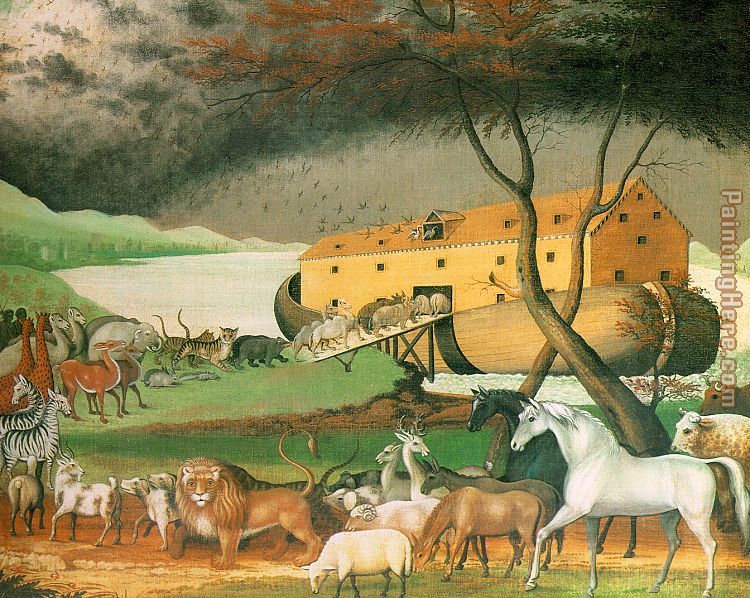
There’s quite a menagerie to American
politics. At one end of our zoo, there are the donkeys and at the far right,
the elephants. Neither are very cleanly creatures, and both of them—like
monkeys—have a tendency to fling feces. Candidacy itself is described as a
horse race, and candidate debates have turned into a dog and pony show. For
their part, the media are parrots, repeating what is told to them and squawking
every time they want ratings. (If you care for a reference, see Nancy Grace to
the left and Bill O’Reilly to the right.) The publics are like sheep and
everyone involved has a tendency, like ostriches were once said to do, to bury
their heads in the sand when real issues are raised.
But, please, don’t take my word for it.
The January 26 CNN debate will speak for itself. Or not—sure, there was a lot
of talking, but even the media do not seem to be quite sure of how much was
actually said (viz Proverbs 29:20*).
I’ll be the first to admit that I didn’t
watch it. The pomp was just too much, and we’re in an age of technology, after
all. It was just too easy to close the youtube window. It was then I was forced
to wonder if this represented a problem with the American publics’ attention
span or the usefulness of political reporting. Maybe we should check the polls.
I’d
have watched it in real time, but—like many young Americans—I have a real job.
Instead, I went to the transcripts, where the audience isn’t subjected to the
fake smiles and peacock feather fluffing.
There were plenty of cockfights that the
media gobbled up like hungry swine, but the overall quality was sloppy. With
pretty, overarching phrases like, “secure the border,” “free trade,” and
“immigrant grandmother,” we didn’t get much more than those 8-second sound bites
for the media to play until we’re sick of hearing them.
In the first question (“Can you tell me
what specific actions you'll take to address the costly consequences of illegal
immigration while preserving the rights of those who seek to immigrate
legally?”), only Ron Paul gave a real response. Santorum spouted a lot of crap
about securing the border, following laws, and sanctions against employers.
Gingrich basically agreed, adding that legal immigration should be easier to
acquire and gave an endorsement to his consorts in big business—American
Express, Visa and Master Card. (Someone got laid for that… proverbially, of
course.) Romney stood by self-deportation. None of them gave details or
answered how they would accomplish these goals or with what resources. Save for
Paul, who clearly and succinctly said that we should stop focusing on other
countries, and place the resources there back home. (http://knowyourmeme.com/memes/push-it-somewhere-else-patrick)

If you know anything about history, you’d
remember that that was Rome’s version of self-preservation. Something about not
overextending oneself with conquest and performing baseline defense. Good
strategy. A classic.
Shortly thereafter, we get to the
prettiest cockfight of the debate, one that no one watching or reading the news
can seem to escape. Like a freshman repeating the first incident wherein a
professor cursed in class, the media can’t seem to get enough of Romney’s
overuse of the phrase “inexcusable.” It wasn’t even as good as the Sicilian’s
equally abused, “inconceivable” of the Princess
Bride. Nevertheless, Gingrich and Romney fought bitterly over the former’s
use of the superlative (“most anti-immigrant candidate”) in describing the
latter.
Not to say there was any real political
consequence to this clash. In the end, people won’t—read: shouldn’t—be swayed
to vote in their primaries either way based on the few-minutes clip of their
posturing.
And the real problem with the American
media is that they focus on events outside of real consequence. Not just
events.
At this point a question is asked
concerning relations with Latin American countries. There is some tension here
between Paul and Santorum, wherein Paul suggests free trade as an answer and
Santorum suggests “closer ties.” Paul responds cattily (the animal puns keep
coming!) that Santorum doesn’t define his idea of closer ties and accuses that
closer ties involve “that we impose ourselves, go and pick the dictators,
undermine certain governments, also sending them a lot of money.”
Santorum responds that Paul “obviously
wasn’t listening to” his closer ties argument.
Let’s pause for a moment and go back to
history. Iraq is close enough that you don’t have to do any real research. We
took out a dictator that was, by Santorum’s terms, “a threat” to democracy. We
have tried to mold them into “friends who want to engage and support America,
who want to be great trading partners and great allies for our country.” And to
do so, we imposed ourselves, picked the dictators, forced democracy (read: undermined
certain governments), and threw a lot of money at it to “accomplish” these
noble goals.
Who,
Mr. Santorum, was listening?
Now, we get to another catfight. Romney accuses Gingrich of
having another consort (he does get around, doesn’t he?) in American big
business—Freddie Mac, who reportedly hired him to maintain the marriage and
strength of Freddie Mac and Fannie Mae (the only marriage he’s been able to
save). Gingrich responds like any upset 2nd grader—with an ad hominem attack.
“Well you have stock in these companies.
Who you calling cootie queen, you lint licker?” Okay, I might have paraphrased.
In the end, Romney plays dumb. He did this
just before the Fannie and Freddie fight, concerning an ad about Gingrich,
wherein he accuses Gingrich of calling Spanish, “the language of the ghetto.”
He claimed he didn’t recall the ad, and CNN researchers quickly hunted it down,
proudly endorsed by Romney at the end. In this case, he claimed that his
finances were “managed by a trustee”—must be nice, huh? So, it didn’t matter
that he made millions of dollars in the housing bubble. It wasn’t his fault,
right?
In the end, they both looked like
asses—with or without the animal puns.
Now, in the animal world, we get to see a
prime example of the fight or flight response. Observe:
Returning from commercial break, Blitzer
confronts Gingrich about his response to Romney’s finances. Here, we see
flight. Gingrich calls it a nonsense question, and with sweet-talk unrivaled by
lyrebirds in courtship, implores the moderator to skip the question.
Now, we see fight! Like a proper predator,
Mr. Wolf sticks to his guns and quotes Gingrich in saying Romney, “lives in a
world of Swiss bank and Cayman Island bank accounts.” Shrewdly as a snake and
with the innocence of a dove, the moderator pointedly adds, “I didn’t say that.
You did.”
I’d paraphrase here, but I can display
Gingrich’s horror no better than he, himself. “I did,” he admits. “And I'm
perfectly happy to say that on an interview on some TV show. But this is a
national debate, where you have a chance to get the four of us to talk about a
whole range of issues.”
Romney skips the dove part and strikes
like a cobra. “Wouldn't it be nice if people didn't make accusations somewhere
else that they weren't willing to defend here?”
Well, sir, wouldn’t it be nice if you didn’t
say that to exploit over quoting in the media for face time?
_________________________________________________________
*(NIV) "There is more hope for a fool than someone who speaks without thinking.
Subscribe to:
Posts (Atom)