The Monkey Cage has an interesting blog up now about opinions on term limits for Supreme Court justices. I like the entry, because it's a friendly conversation between different bloggers and political scientists. It's a neat article, and you should read it.
If you don't want to, that's ok. I bring your attention to the end of the entry. There is a criticism of a bias that I think has been hiding in the shadows. Journalists talk to journalists. They don't talk to political scientists very much. Of course, we see correspondents on television, but they are saying what they are "supposed to say", not discussing their involved and difficult-to-understand research.
This may be journalists' fault, but it may also be the scientists' fault. Scientists' have had a notorious issue explaining their research findings to the everyday Joe. Through the media, Joe the plumber is starting to be able to understand politics (at least more than he understands chemistry research), but at what cost? I wonder if this bias will affect the new media as research starts to penetrate the media through interwebular outlets.

Showing posts with label politics. Show all posts
Showing posts with label politics. Show all posts
Monday, April 9, 2012

Monday, March 19, 2012
On the Monkey Cage, John Sides blogged about public knowledge of recent political events, ones that we can assume were reported on by the mass media. In this blog titled, Why Campaigns Have So Few "Game-Changers," he commented that the survey showed that Americans cared very little about this campaign and the political events that have occurred.
While these are the findings of the survey, Sides concludes that although the inability to answer specific "events-related" questions accurately is shown, Americans are certainly not unintelligent or bad citizens. They just don't follow politics very closely, which is entirely normal.
Sides's most important comment however was what we can deduct from this survey- it does more "to question the assumptions of commentators, who are often anxious to inflate every argument during the campaign to a 'game changer'—even if many Americans aren’t really watching the game." This conclusion is interesting because it seems to contradict the nature of the "marketplace" with regards to the mass media providing what Americans desire to "consume." If Americans are not really watching the political game, then why would the media place emphasis on the campaign and what candidates are saying? Possibly, the media is fulfilling their role by still providing political coverage despite what the public truly desires to watch or read.
Typically, an average individual remembers the frivolous remarks or reports of the news such as the ones utilized in the survey-"Santorum’s statement about birth control, Obama’s call to Sandra Fluke, and Santorum’s comment about Obama’s snobbery." If Americans cannot even recall these highly reported events, what exactly are they doing? And if no one is truly watching, and the media still reports on it, are they doing their job?
Most importantly however, Sides's final conclusion raises the question of the media's role in influencing public opinion. If viewers aren't actually comprehending or using the news provided by the mass media, then they will never have a large effect on influencing public opinion.
While these are the findings of the survey, Sides concludes that although the inability to answer specific "events-related" questions accurately is shown, Americans are certainly not unintelligent or bad citizens. They just don't follow politics very closely, which is entirely normal.
Sides's most important comment however was what we can deduct from this survey- it does more "to question the assumptions of commentators, who are often anxious to inflate every argument during the campaign to a 'game changer'—even if many Americans aren’t really watching the game." This conclusion is interesting because it seems to contradict the nature of the "marketplace" with regards to the mass media providing what Americans desire to "consume." If Americans are not really watching the political game, then why would the media place emphasis on the campaign and what candidates are saying? Possibly, the media is fulfilling their role by still providing political coverage despite what the public truly desires to watch or read.
Typically, an average individual remembers the frivolous remarks or reports of the news such as the ones utilized in the survey-"Santorum’s statement about birth control, Obama’s call to Sandra Fluke, and Santorum’s comment about Obama’s snobbery." If Americans cannot even recall these highly reported events, what exactly are they doing? And if no one is truly watching, and the media still reports on it, are they doing their job?
Most importantly however, Sides's final conclusion raises the question of the media's role in influencing public opinion. If viewers aren't actually comprehending or using the news provided by the mass media, then they will never have a large effect on influencing public opinion.
Monday, February 27, 2012
Obama Apologizing?
http://newsroom.blogs.cnn.com/2012/02/27/no-talking-points-presidential-apologies/?iref=allsearch
http://www.cnn.com/video/#/video/bestoftv/2012/02/23/exp-quran-burning-sparks-rage-in-afghanistan.cnn
After the recent events in Afghanistan, President Obama came out and apologized to the Afghan government for the accidental burning of the Quran by American soldiers. Should he really be apologizing for a "accidental" buying of the muslim religious book? Why should he apologize for an accident?
President Obama apologized on behalf of our country for the actions of some of our soldiers. Some American soldiers allegedly put the Quran's in a burning pit, but supposedly didn't intend to burn them as religious documents, whatever that means. The U.S. has announced that it is not sure what it is going to do about the incident, but that there will be actions taken to hold those responsible accountable.
Every republican presidential hopeful has responded strongly to Obama's apology, saying that he should not have apologized at all. The GOP's are all over Obama for his apology. But why is it so bad that he apologized? The fact that American soldiers burned the Muslim holy book is ridiculous, these soldiers are representing America in every action they take. This was an incident that even if it was "accidental" should have never happened. It is outrageous. Before this, the U.S. was mainly hated by the radical Muslims, but in burning the Quran, we have made enemies with many of the modest Muslims as well. Afghanistan is in uproar due to this incident and the Taliban is using this to gain strength. The least the U.S. could do in this situation is apologize for the incident.
The reporter in the first video clearly supports Obama in this situation which is expected because he works for CNN. He states that other presidents have apologized for things just as Obama is doing now. He shows videos of these past presidents apologizing for various reasons and even goes so far as to attack the GOP candidates in saying that which ever one of them is elected, if they are elected, they will have to apologize for things as well. The reporter show his liberal bias and propaganda through the entire video and is not subtle about it at all.
http://www.cnn.com/video/#/video/bestoftv/2012/02/23/exp-quran-burning-sparks-rage-in-afghanistan.cnn
After the recent events in Afghanistan, President Obama came out and apologized to the Afghan government for the accidental burning of the Quran by American soldiers. Should he really be apologizing for a "accidental" buying of the muslim religious book? Why should he apologize for an accident?
President Obama apologized on behalf of our country for the actions of some of our soldiers. Some American soldiers allegedly put the Quran's in a burning pit, but supposedly didn't intend to burn them as religious documents, whatever that means. The U.S. has announced that it is not sure what it is going to do about the incident, but that there will be actions taken to hold those responsible accountable.
Every republican presidential hopeful has responded strongly to Obama's apology, saying that he should not have apologized at all. The GOP's are all over Obama for his apology. But why is it so bad that he apologized? The fact that American soldiers burned the Muslim holy book is ridiculous, these soldiers are representing America in every action they take. This was an incident that even if it was "accidental" should have never happened. It is outrageous. Before this, the U.S. was mainly hated by the radical Muslims, but in burning the Quran, we have made enemies with many of the modest Muslims as well. Afghanistan is in uproar due to this incident and the Taliban is using this to gain strength. The least the U.S. could do in this situation is apologize for the incident.
The reporter in the first video clearly supports Obama in this situation which is expected because he works for CNN. He states that other presidents have apologized for things just as Obama is doing now. He shows videos of these past presidents apologizing for various reasons and even goes so far as to attack the GOP candidates in saying that which ever one of them is elected, if they are elected, they will have to apologize for things as well. The reporter show his liberal bias and propaganda through the entire video and is not subtle about it at all.
Monday, February 6, 2012
Watergate Lesson Forgotten?
http://www.cnn.com/2012/02/04/politics/watergate-reform/index.html
The problem of potentially currupt finacial backing behind political candidates has been a big issue since the Watergate Scandal. Many poeple think a huge lesson of Watergate was that big money and secrecy currupts. Some experts are warning the public that the reforms made after Watergate to regulate campaign fundraising have been almost completely thrown away. There are no longer big regulations of campaign fundraising, but does that really matter? The flow of money to candidates is going to happen regardless of the law or regulations put in place to try and stop it. Candidates will get the money they need through any way possible, and if we think that simple reforms will stop them, we are nieve. Corporations and other powerful sources of money will always supply money to political candidates because they recieve favors in return for the money, whether its legal or not. The main issue is the secrecy of the sources behind all of the money the candidates get, because there could be some curruption involved.
It is impossible to stop the influence of money on political campaigning, but it is possible to somewhat regulate it. A political scientist and professor at the College of the Holy Cross in Massachusetts says, "The remedy is publicity". The most powerful way to help regualte the secret funding of political campaigns is the media. If the media exposed more information about which corporations are feeding money to which canidates, we could control the flow of money a little more and somewhat eliminate curruption. Transparency would give voters the information needed to hold the candidates accountable. However, in reality, it is unlikely that much will change about the fincacial backing of political candidates. This years elecetion will have an enormous amount of secret financial backing to candidates.
The problem of potentially currupt finacial backing behind political candidates has been a big issue since the Watergate Scandal. Many poeple think a huge lesson of Watergate was that big money and secrecy currupts. Some experts are warning the public that the reforms made after Watergate to regulate campaign fundraising have been almost completely thrown away. There are no longer big regulations of campaign fundraising, but does that really matter? The flow of money to candidates is going to happen regardless of the law or regulations put in place to try and stop it. Candidates will get the money they need through any way possible, and if we think that simple reforms will stop them, we are nieve. Corporations and other powerful sources of money will always supply money to political candidates because they recieve favors in return for the money, whether its legal or not. The main issue is the secrecy of the sources behind all of the money the candidates get, because there could be some curruption involved.
It is impossible to stop the influence of money on political campaigning, but it is possible to somewhat regulate it. A political scientist and professor at the College of the Holy Cross in Massachusetts says, "The remedy is publicity". The most powerful way to help regualte the secret funding of political campaigns is the media. If the media exposed more information about which corporations are feeding money to which canidates, we could control the flow of money a little more and somewhat eliminate curruption. Transparency would give voters the information needed to hold the candidates accountable. However, in reality, it is unlikely that much will change about the fincacial backing of political candidates. This years elecetion will have an enormous amount of secret financial backing to candidates.
Money Matter$
News and other media outlets love to concentrate their stories on the flashy topics, like Donald Trump endorsing Mitt Romney or Romney's average donor amounts of $900-$1000. When someone writes a big check every so often to support a political candidate, the cameras and reporters are always there. When are the cameras not there? It's when tens of thousands of people log on to the internet to make $100-$200 donations, considered by the FEC to be "small donations" by "small donors."
Interestingly enough, in 2008, BO deepened the pockets of his political campaign through these small donations. Aside from the intangible warm and toasty feelings that voters on either side of the aisle felt as he delivered his speeches and became more commercial, the donations that he collected from small contributions definitely helped to seal the deal with his victory. Campaign reports from BO and Romney, show that:
"Obama's campaign in 2011 raised 60 percent of funds, or $58.5 million, from donors who gave less than $200. Mitt Romney in 2011 raised only 9 percent of its total funds, or $5.2 million, from donors who gave less than $200."
Evidence shows that when it comes to political campaigns, money talks. The amount of monetary support that the Republican candidate is able to muster will be the factor that controls how close this race will be... and not just by a handful of elites throwing around big checks. Let's hope our friends on the right figure this one out before they're staring down another defeat.
One blogger said it before I could:
"It's a matter of simple math. If two people have the same amound of money, but one has large bills ant the other has small bills, there are more small bills than large bills.
100% of the contributo
The republican
-l78lancer
Hypothetically speaking, if Trump sponsored Romney's entire campaign, at the end day, he can only cast one ballot. His billions are only worth one vote. If Obama was sponsored by the four broke bums in the alleyway, he may not have as much money, but that a handful more votes.
Maybe the cameras and the reporters aren't paying attention to what's important this election season. It's not the Trumps or the rich, close friends lining the candidates' pockets. Those only constitute a few votes. Where the cameras aren't pointed, the "small people" with the "small donations" are constituting for HUGE VOTES. Now that's my kind of math.
Everyone loves the good ole underdog stories, right?
http://www.huffingtonpost.com/2012/02/05/obama-2012-campaign-romney-fundraising_n_1255618.html?ref=politics
Interestingly enough, in 2008, BO deepened the pockets of his political campaign through these small donations. Aside from the intangible warm and toasty feelings that voters on either side of the aisle felt as he delivered his speeches and became more commercial, the donations that he collected from small contributions definitely helped to seal the deal with his victory. Campaign reports from BO and Romney, show that:
"Obama's campaign in 2011 raised 60 percent of funds, or $58.5 million, from donors who gave less than $200. Mitt Romney in 2011 raised only 9 percent of its total funds, or $5.2 million, from donors who gave less than $200."
Evidence shows that when it comes to political campaigns, money talks. The amount of monetary support that the Republican candidate is able to muster will be the factor that controls how close this race will be... and not just by a handful of elites throwing around big checks. Let's hope our friends on the right figure this one out before they're staring down another defeat.
One blogger said it before I could:
"It's a matter of simple math. If two people have the same amound of money, but one has large bills ant the other has small bills, there are more small bills than large bills.
100% of the contributo
The republican
-l78lancer
Hypothetically speaking, if Trump sponsored Romney's entire campaign, at the end day, he can only cast one ballot. His billions are only worth one vote. If Obama was sponsored by the four broke bums in the alleyway, he may not have as much money, but that a handful more votes.
Maybe the cameras and the reporters aren't paying attention to what's important this election season. It's not the Trumps or the rich, close friends lining the candidates' pockets. Those only constitute a few votes. Where the cameras aren't pointed, the "small people" with the "small donations" are constituting for HUGE VOTES. Now that's my kind of math.
Everyone loves the good ole underdog stories, right?
http://www.huffingtonpost.com/2012/02/05/obama-2012-campaign-romney-fundraising_n_1255618.html?ref=politics
Monday, January 30, 2012
Facebook, the Political Media and Networking Site
We are all well aware of Facebook’s absurd popularity, success, and wealth through its ability to allow devotees to post their every thought, expression, and movement on the public internet for anyone and all to view. Facebook shockingly became the world’s premier social media site, with your basic every day users acting as the company’s unpaid “reporters.” Recently, the company that encourages its popular cult to publicize their every move announced its upcoming application called “2012 Matters: What Matters Most.”
This application will allow Facebook members to interact in political affairs by answering poll questions and statuses on the issues that matter most this election. Most interesting, is Facebook’s new method of posting user data and thoughts- the very public and very large Nasdaq digital billboard in Times Square, New York.
Facebook’s direct newfound interest in politics is quite peculiar. With this new application, it will be the only major social media and networking site to inspire its users to become political activist. So why would a social media site be so concerned with giving its dedicated users this opportunity of public political activism?
Tanzina Vega, writer for the “Media Decoder” of the New York Times, cites in her discovery and coverage of Facebook’s new application that “Facts don’t spread. Emotions do spread.” This statement by Adams, a brand experience manager for Facebook, indicates the newest general trends of the media- rallying the audience towards one pole or the other by appealing to personal emotions in hopes of providing enough media coverage to influence voters towards a particular candidate. Ultimately, if that media outlet has the most influence on voter opinion, then their desired candidate will win and major profits will be had- a major win for the “winning” company’s finances and policies.
Is political activism for profit Facebook’s goal for this new application? Will this application perhaps uncover a bias in Facebook’s corporate structure? Only time will tell what the impact of the political polling application will be. One thing is certain however…users will jump at the chance to publicize their mediocre political opinions on a massive Times Square billboard.
Original Blog: http://mediadecoder.blogs.nytimes.com/2012/01/29/facebook-users-to-put-political-views-up-in-lights-on-times-square/?ref=politics
Sunday, January 29, 2012
TL;DR
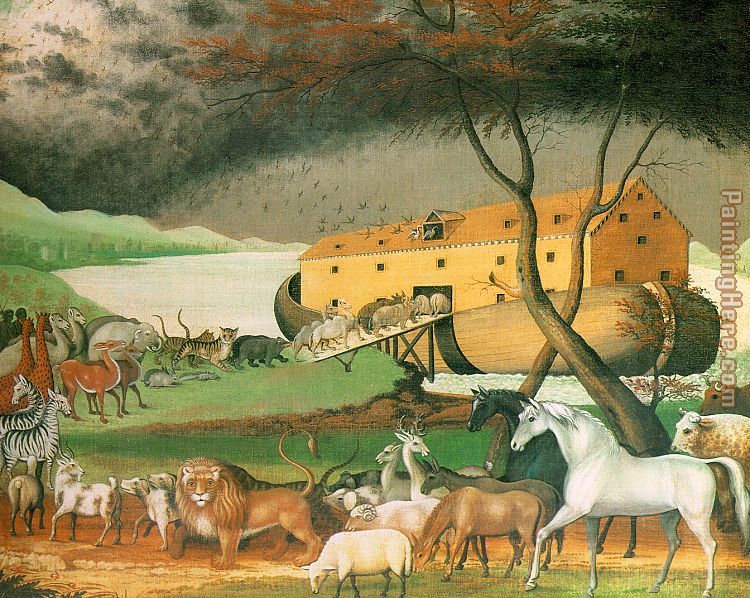
There’s quite a menagerie to American
politics. At one end of our zoo, there are the donkeys and at the far right,
the elephants. Neither are very cleanly creatures, and both of them—like
monkeys—have a tendency to fling feces. Candidacy itself is described as a
horse race, and candidate debates have turned into a dog and pony show. For
their part, the media are parrots, repeating what is told to them and squawking
every time they want ratings. (If you care for a reference, see Nancy Grace to
the left and Bill O’Reilly to the right.) The publics are like sheep and
everyone involved has a tendency, like ostriches were once said to do, to bury
their heads in the sand when real issues are raised.
But, please, don’t take my word for it.
The January 26 CNN debate will speak for itself. Or not—sure, there was a lot
of talking, but even the media do not seem to be quite sure of how much was
actually said (viz Proverbs 29:20*).
I’ll be the first to admit that I didn’t
watch it. The pomp was just too much, and we’re in an age of technology, after
all. It was just too easy to close the youtube window. It was then I was forced
to wonder if this represented a problem with the American publics’ attention
span or the usefulness of political reporting. Maybe we should check the polls.
I’d
have watched it in real time, but—like many young Americans—I have a real job.
Instead, I went to the transcripts, where the audience isn’t subjected to the
fake smiles and peacock feather fluffing.
There were plenty of cockfights that the
media gobbled up like hungry swine, but the overall quality was sloppy. With
pretty, overarching phrases like, “secure the border,” “free trade,” and
“immigrant grandmother,” we didn’t get much more than those 8-second sound bites
for the media to play until we’re sick of hearing them.
In the first question (“Can you tell me
what specific actions you'll take to address the costly consequences of illegal
immigration while preserving the rights of those who seek to immigrate
legally?”), only Ron Paul gave a real response. Santorum spouted a lot of crap
about securing the border, following laws, and sanctions against employers.
Gingrich basically agreed, adding that legal immigration should be easier to
acquire and gave an endorsement to his consorts in big business—American
Express, Visa and Master Card. (Someone got laid for that… proverbially, of
course.) Romney stood by self-deportation. None of them gave details or
answered how they would accomplish these goals or with what resources. Save for
Paul, who clearly and succinctly said that we should stop focusing on other
countries, and place the resources there back home. (http://knowyourmeme.com/memes/push-it-somewhere-else-patrick)

If you know anything about history, you’d
remember that that was Rome’s version of self-preservation. Something about not
overextending oneself with conquest and performing baseline defense. Good
strategy. A classic.
Shortly thereafter, we get to the
prettiest cockfight of the debate, one that no one watching or reading the news
can seem to escape. Like a freshman repeating the first incident wherein a
professor cursed in class, the media can’t seem to get enough of Romney’s
overuse of the phrase “inexcusable.” It wasn’t even as good as the Sicilian’s
equally abused, “inconceivable” of the Princess
Bride. Nevertheless, Gingrich and Romney fought bitterly over the former’s
use of the superlative (“most anti-immigrant candidate”) in describing the
latter.
Not to say there was any real political
consequence to this clash. In the end, people won’t—read: shouldn’t—be swayed
to vote in their primaries either way based on the few-minutes clip of their
posturing.
And the real problem with the American
media is that they focus on events outside of real consequence. Not just
events.
At this point a question is asked
concerning relations with Latin American countries. There is some tension here
between Paul and Santorum, wherein Paul suggests free trade as an answer and
Santorum suggests “closer ties.” Paul responds cattily (the animal puns keep
coming!) that Santorum doesn’t define his idea of closer ties and accuses that
closer ties involve “that we impose ourselves, go and pick the dictators,
undermine certain governments, also sending them a lot of money.”
Santorum responds that Paul “obviously
wasn’t listening to” his closer ties argument.
Let’s pause for a moment and go back to
history. Iraq is close enough that you don’t have to do any real research. We
took out a dictator that was, by Santorum’s terms, “a threat” to democracy. We
have tried to mold them into “friends who want to engage and support America,
who want to be great trading partners and great allies for our country.” And to
do so, we imposed ourselves, picked the dictators, forced democracy (read: undermined
certain governments), and threw a lot of money at it to “accomplish” these
noble goals.
Who,
Mr. Santorum, was listening?
Now, we get to another catfight. Romney accuses Gingrich of
having another consort (he does get around, doesn’t he?) in American big
business—Freddie Mac, who reportedly hired him to maintain the marriage and
strength of Freddie Mac and Fannie Mae (the only marriage he’s been able to
save). Gingrich responds like any upset 2nd grader—with an ad hominem attack.
“Well you have stock in these companies.
Who you calling cootie queen, you lint licker?” Okay, I might have paraphrased.
In the end, Romney plays dumb. He did this
just before the Fannie and Freddie fight, concerning an ad about Gingrich,
wherein he accuses Gingrich of calling Spanish, “the language of the ghetto.”
He claimed he didn’t recall the ad, and CNN researchers quickly hunted it down,
proudly endorsed by Romney at the end. In this case, he claimed that his
finances were “managed by a trustee”—must be nice, huh? So, it didn’t matter
that he made millions of dollars in the housing bubble. It wasn’t his fault,
right?
In the end, they both looked like
asses—with or without the animal puns.
Now, in the animal world, we get to see a
prime example of the fight or flight response. Observe:
Returning from commercial break, Blitzer
confronts Gingrich about his response to Romney’s finances. Here, we see
flight. Gingrich calls it a nonsense question, and with sweet-talk unrivaled by
lyrebirds in courtship, implores the moderator to skip the question.
Now, we see fight! Like a proper predator,
Mr. Wolf sticks to his guns and quotes Gingrich in saying Romney, “lives in a
world of Swiss bank and Cayman Island bank accounts.” Shrewdly as a snake and
with the innocence of a dove, the moderator pointedly adds, “I didn’t say that.
You did.”
I’d paraphrase here, but I can display
Gingrich’s horror no better than he, himself. “I did,” he admits. “And I'm
perfectly happy to say that on an interview on some TV show. But this is a
national debate, where you have a chance to get the four of us to talk about a
whole range of issues.”
Romney skips the dove part and strikes
like a cobra. “Wouldn't it be nice if people didn't make accusations somewhere
else that they weren't willing to defend here?”
Well, sir, wouldn’t it be nice if you didn’t
say that to exploit over quoting in the media for face time?
_________________________________________________________
*(NIV) "There is more hope for a fool than someone who speaks without thinking.
Subscribe to:
Posts (Atom)